

Reclaim the Em Dash!
You probably recall it from the classroom—the elegant, long hyphen used to separate a thought, elaborate a point, create a breathing space in writing.
“There can’t be much more to it, can there?” you might think.
In 2026, think again.
This tiny, seemingly innocent line has recently become the source of a sizeable amount of controversy.
But before we dig into that case, an ultra-quick introduction.
There are two types of dashes: one short (–) and one long (—), respectively known as en dash and em dash. In Norwegian, we call them “tankestrek,” which literally translates to “thought line.”
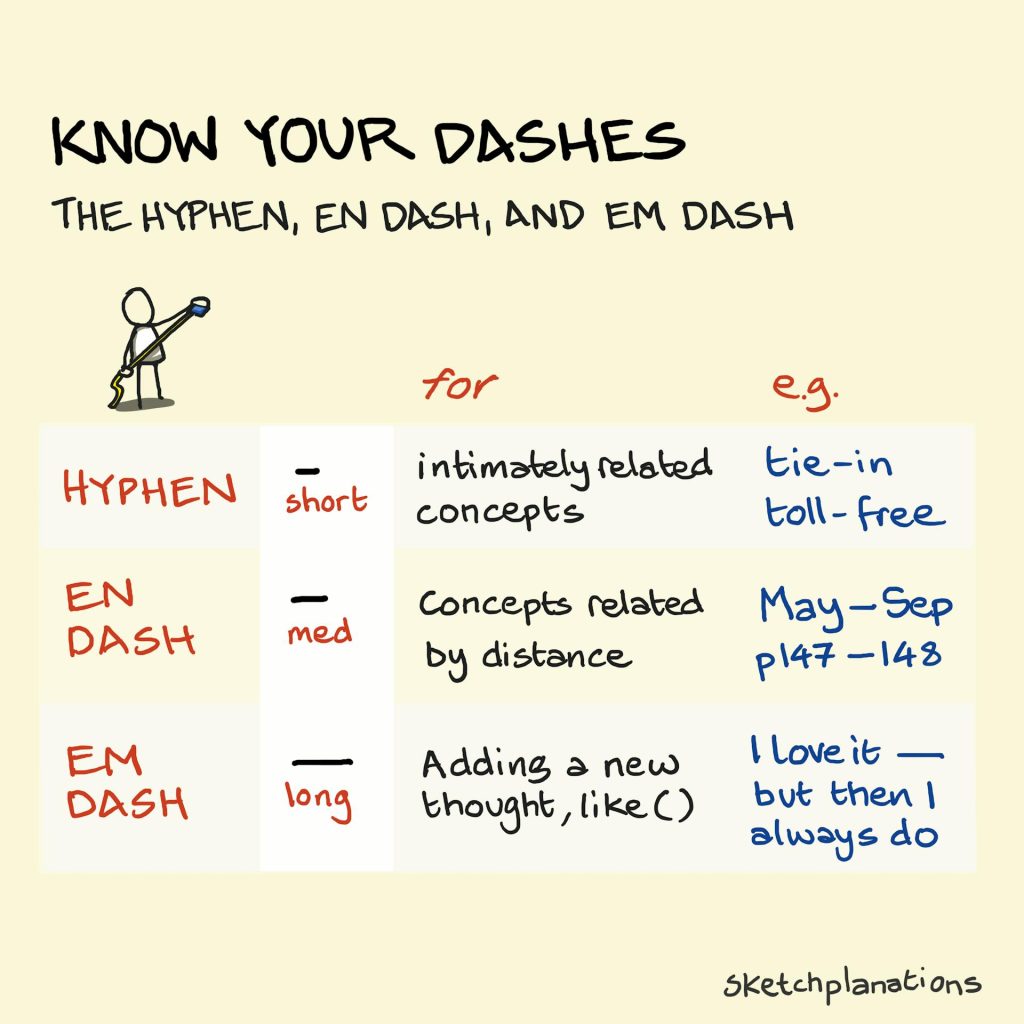
Illustration: Sketchplanations
In English, the en dash is mostly used to indicate a span or range between items such as dates, numbers, or time points. The em dash is used to introduce a separate clause—an additional point, an explanatory phrase, or an example—similar to a comma, colon, or parenthesis. In Norwegian, we use the en dash for this purpose (hence, a common punctuation error frequently overlooked by both AI and human translators).
Thanks so much for that one, Språkrådet…
The em dash has long been known as a potential “pitfall,” its overuse deemed as a sign of poor writing. When it comes to punctuation, I like to say that less is more. Like its misunderstood relative, the semicolon, the em dash should be used sparingly. Too many instances can weaken readability, but used with care, the em dash makes an impactful tool.
The controversy in mention, however, extends far beyond frequency.
The em dash has now become notorious as the very signature of artificial intelligence.
This debate, also known as “the em dash dilemma,” went viral in early 2025 and rages on at the moment of writing. The issue, in short: because language models have adopted this punctuation to a great extent, the em dash is now seen as an indication of AI-generated text.
Articles are mistakenly labeled as fake, students are suspected of cheating, and professional writers who use—and always have used—the em dash as a natural part of sentence composition are wrongfully accused of using AI.
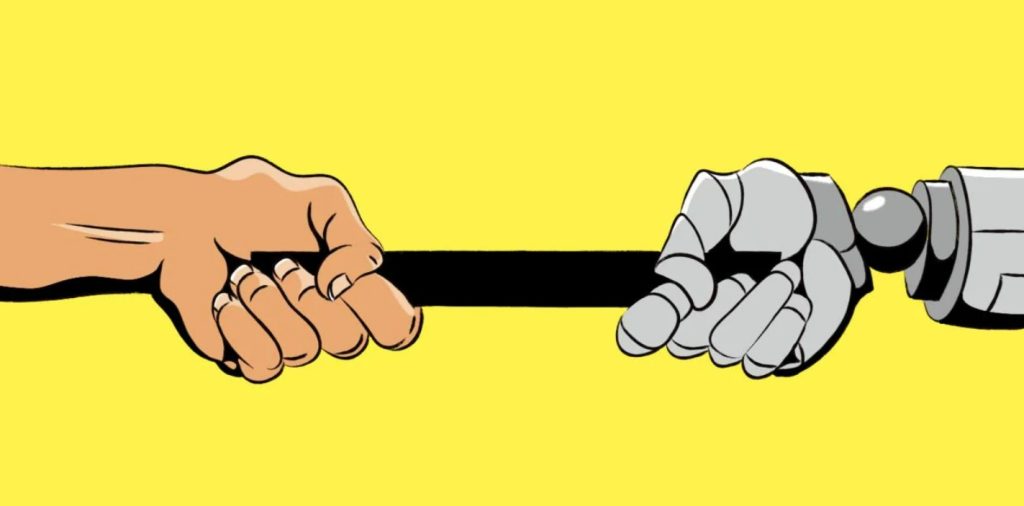
Illustration: Liam Eisenberg, The Wall Street Journal
This notoriety has manifested in writing culture as a prevalent “fear” of the em dash. People are now starting to cut it out completely, afraid it makes their writing look artifical. Some have even gone as far as claiming the em dash is cancelled.
Naturally, this has caused frustration and outrage among the writing community. Many writers have a genuine fondness for this punctuation mark and the creative possibilities it provides. Having this abolished and (for the lack of a better word) besmirched feels like an attack on our integrity.
I can’t say it better than this content writer on LinkedIn:
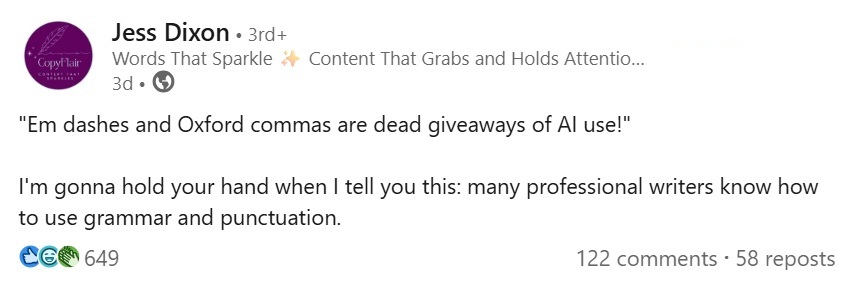
I think we can all agree there’s no doubt who “was here first.” What’s less clear, however, is the extent of the alleged issue.
In this debate, I believe it’s equally important to pose the basic question:
Has AI really besmirched our beloved em dash by littering text with excessive overuse, as some complainers claim?
According to experts, “not really.”
There are two sides to this point.
Firstly, if we’re to believe journalists who so passionately engage themselves in this matter, there is little hard evidence that chatbots use em dashes more than anyone else. As with many internet debates today, it seems the root cause of this issue in itself has been exaggerated. It could also be a classic case of psychological “priming”: once we’re conscious of something, it’s easier to notice instances we would have otherwise overlooked.
Secondly, we must not forget what AI learns from: namely, us.
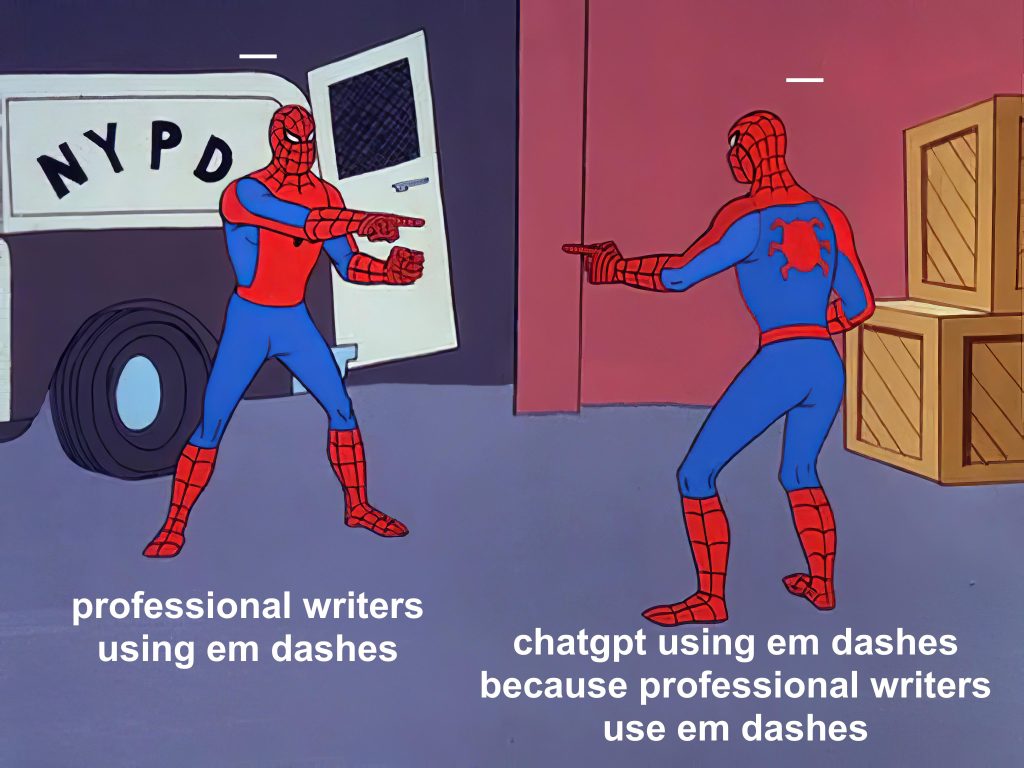
Meme by Rachel S. Hunt
As journalist Joel Stein wrote in The Wall Street Journal this winter: “(…) Em dashes are beloved by professionals. Why? Because more than any other punctuation mark, the em dash is deeply human. It’s the breath marks of Emily Dickinson, the stream of consciousness of Virginia Woolf, the head-clogging maximalism of David Foster Wallace, the self-aggrandizing asides of Joel Stein.” (Nice one, Joel.)
That is also the very reason AI has embraced it so heartily: because it consumes a lot of the best writing out there.
With that in mind, perhaps we can think twice before cutting out that perfectly placed em dash in our article or frowning when another writer chooses not to.
Just because a robot starts imitating something doesn’t mean we humans should stop doing it, right?
What’s next—we stop mixing songs because AI has discovered auto-tune?
We stop using emojis because ChatGPT has realized it looks human?
We stop having real conversations because bots learned how to chat?
…Moral of the story: Don’t let AI win the tug of war.
It’s time to reclaim the em dash!